Palma de Mallorca cruise port is a popular stop for Mediterranean voyages – so how does one navigate the call and what’s there to do in this grand Spanish city?
Words by Eddi Fiegel
Palma de Mallorca cruise port, on the Spanish island of Mallorca, benefits from a splendid location on the edge of the dazzling Mediterranean, and luckily for anyone on cruises, there’s plenty to see in the Balearics’ largest city.
From its vast, spectacular, waterfront cathedral and the cobbled streets of the historic old town to sleek, contemporary art museums and chic, independent boutiques, you can easily fill a day, or more, on a cruise to Palma de Mallorca.
There’s also a vibrant food scene with Michelin-starred restaurants sitting alongside traditional tapas bars and sea-view cafes. Not to mention great beaches. Here’s everything you need to know about Palma de Mallorca cruises.
You’re most likely to find yourself docking at Muelle de Poniente, the city’s major cruise ship terminal.
Many cruise ship operators run shuttle buses from Palma de Mallorca cruise port to the city’s Gothic cathedral (check with your own cruise operator) or there are public buses which run into town (fares around €1.60). The journey takes about 10 minutes. Otherwise, a taxi costs around €15 one way.
Alternatively, if you’ve got plenty of time and feel like some extra exercise, you could walk from Palma de Mallorca cruise port. It’ll take you about 45 minutes, but it’s a pleasant, more or less straight stroll along the harbour, past the fishing boats and yachts into the main town centre.
It may be a cliché but there’s nothing quite like an open-top sightseeing bus if you want to get an overview of Palma de Mallorca and cram in as many sights as possible. The Palma City Sightseeing tours take in most of the key Palma sights and there’s a hop on/hop off option.
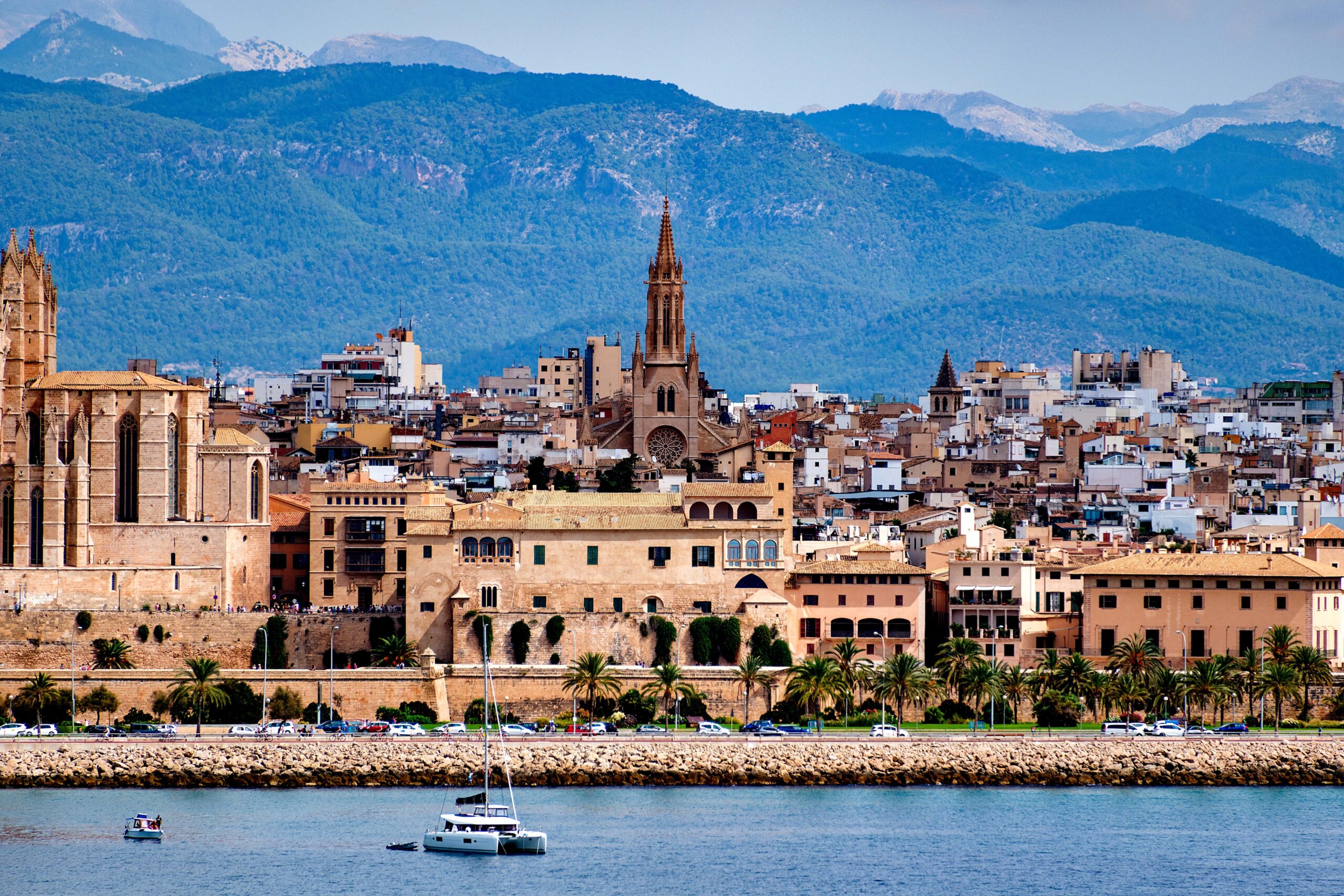
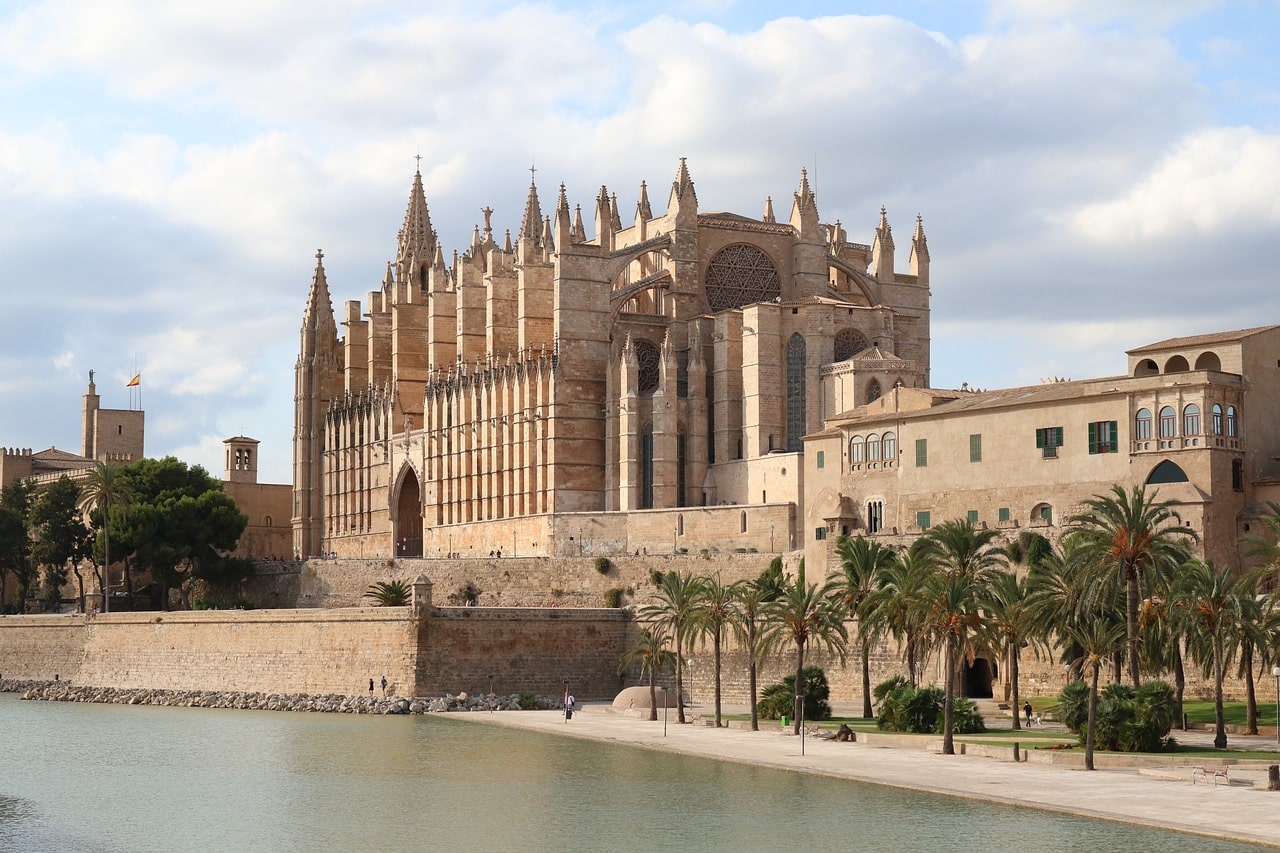
With its Gothic spires towering over the seafront, Palma’s most famous – and impressive – building is also probably the one you’ll catch sight of first.
The huge, 14th-century Catedral-Basilica de Santa Maria de Mallorca [below, right], popularly known as La Seu, is one of Europe’s largest Gothic cathedrals.
Wander down its towering nave to admire the stained-glass windows, especially the rose window – one of the largest in the world. Also worth looking out for is the ironwork ‘Crown of Thorns’ above the altar, created by Catalan architectural maverick Antoni Gaudí.
Originally a Moorish fortress dating back to the 14th century, like the Cathedral, this Gothic palace, just alongside La Seu, is the official residence of the Spanish Royal family when they’re in Mallorca.
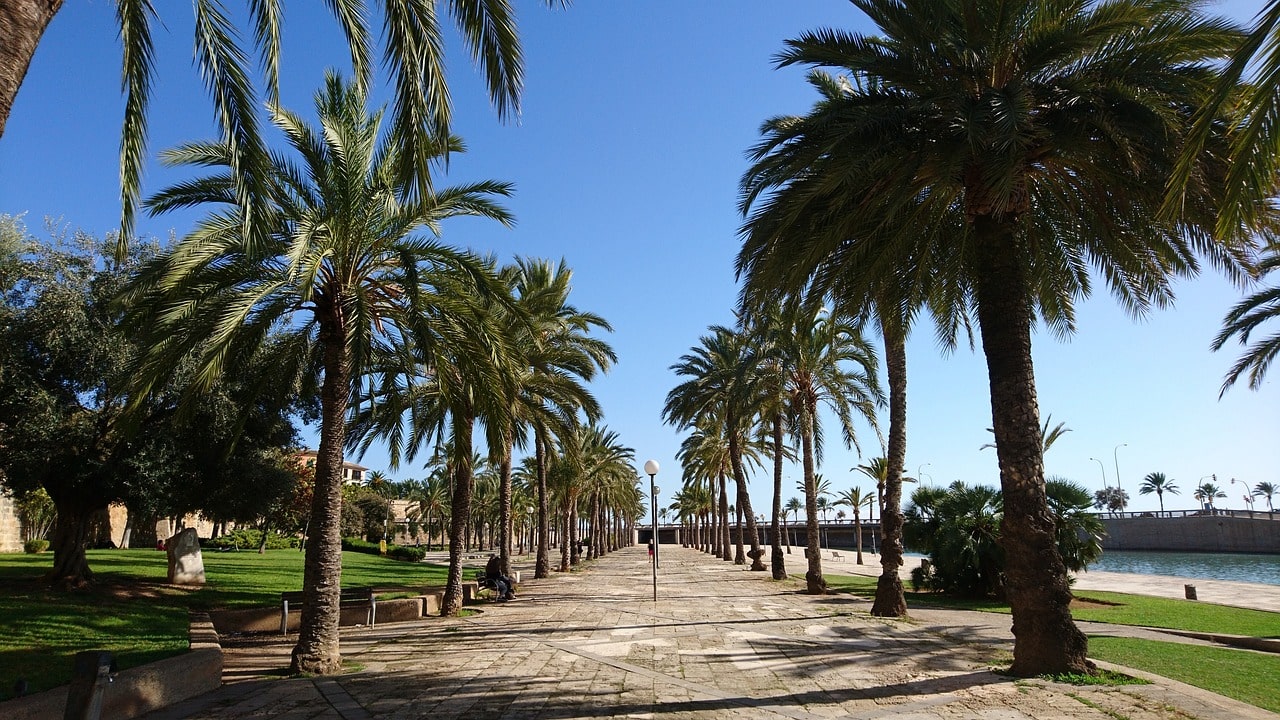
The lavish state rooms are laden with antiques, tapestries and art from the 17th century onwards and the palm-tree-filled, collonaded courtyard is the perfect respite from the heat.
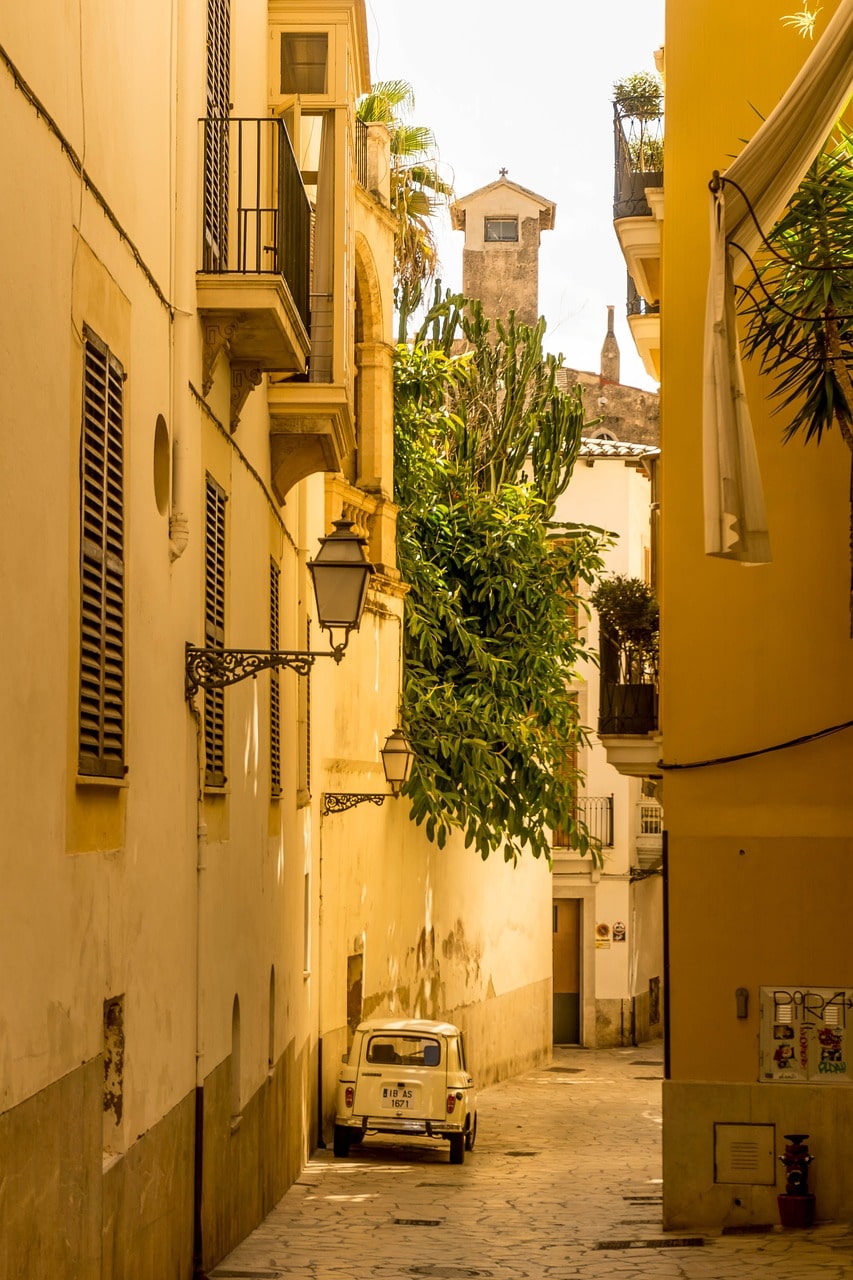
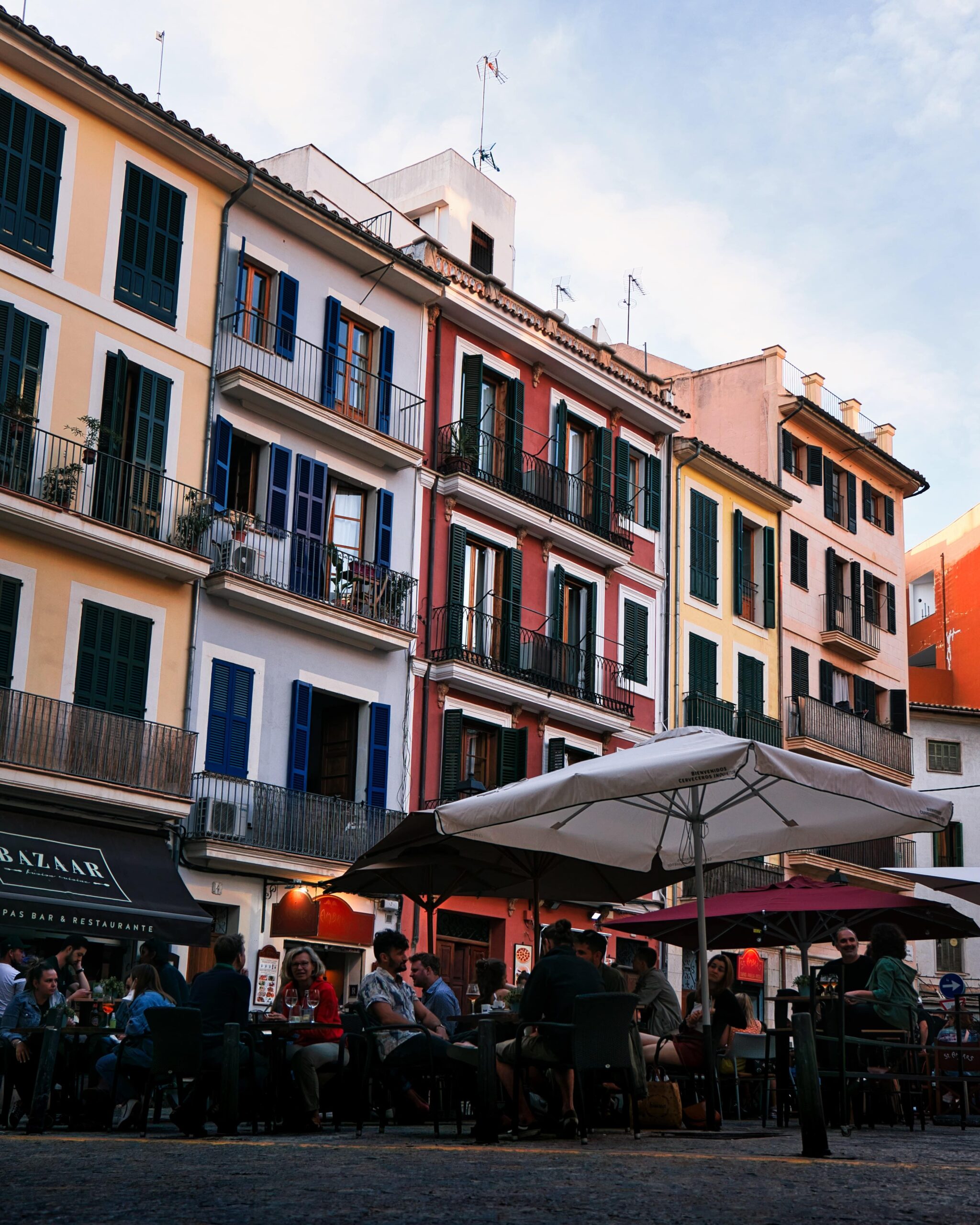
The streets directly behind Palma Cathedral and the Almudaina Palace lead you into the labyrinthine cobbled streets and winding alleys of the Old Town. Along the way you’ll find cafes and restaurants aplenty but also keep an eye out for open doorways where you can spy traditional, plant-filled, Andalusian-style courtyards and patios.

Over the last few years, Palma de Mallorca (and the wider Balearics) has become known for its independent fashion designers and boutiques. Whether you’re on the lookout for something one-off or fancy a browse, you’ll find something for most budgets, whether it’s Louis Vuitton to Zara.
Part Medieval fortress and part steel and glass box, Es Baluard has works by major artists from Picasso, Gaugin and Cezanne to Miro and Magritte. Even if you’re not an art fan, the building is almost as impressive as the paintings.
The roof terrace has wonderful views over the harbour and the café and smart restaurant are also a popular haunt in their own right.
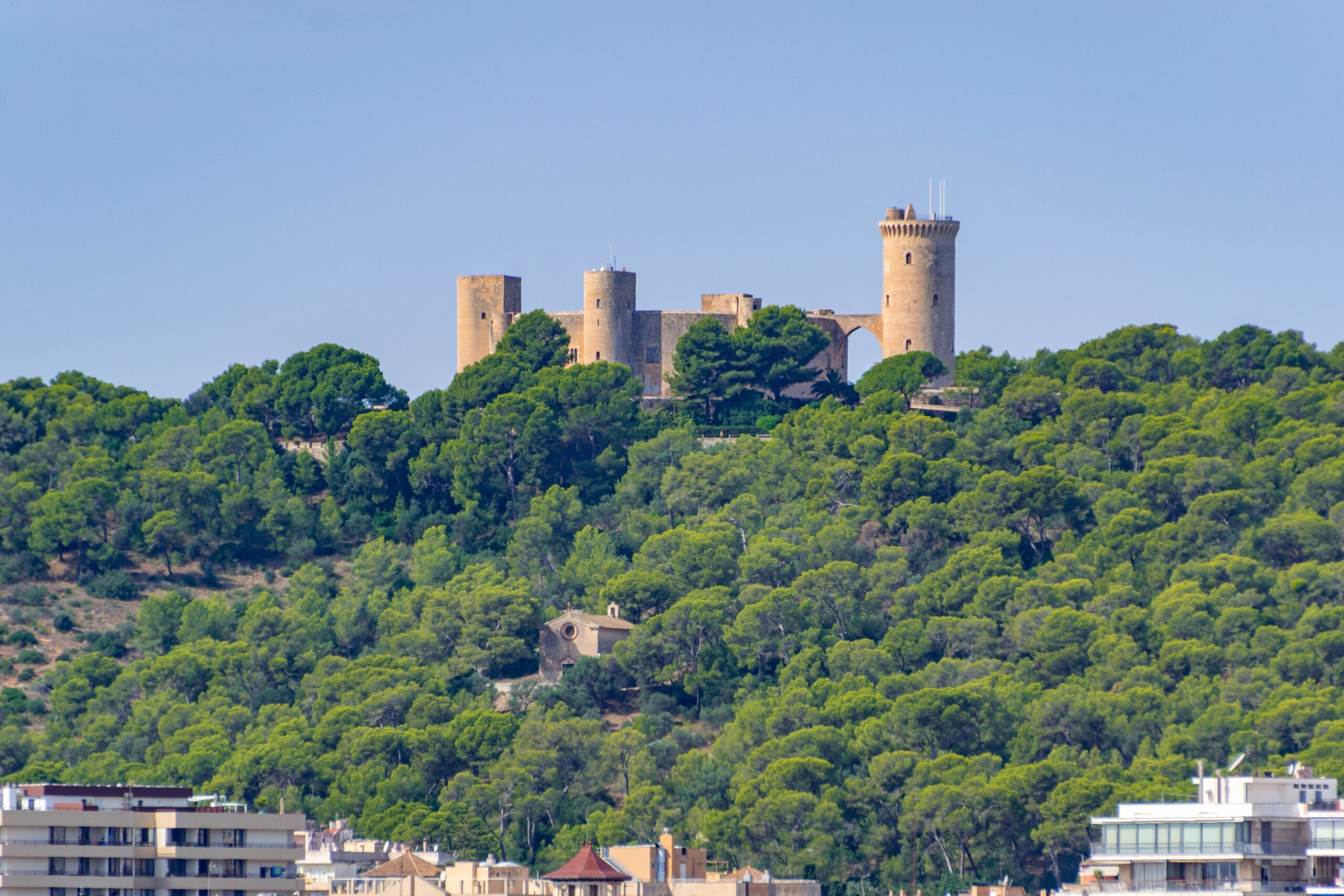
For sweeping, bird’s-eye views over the Bay of Mallorca, look no further than the 14th-century Castell (castle) de Bellver [above, left]. Built entirely in the round amidst a pine-laden hilltop above the bay, the Castell de Bellver is Spain’s only circular Gothic castle.
There’s also a museum exploring the castle’s history and in the summer, classical music concerts in the courtyard.
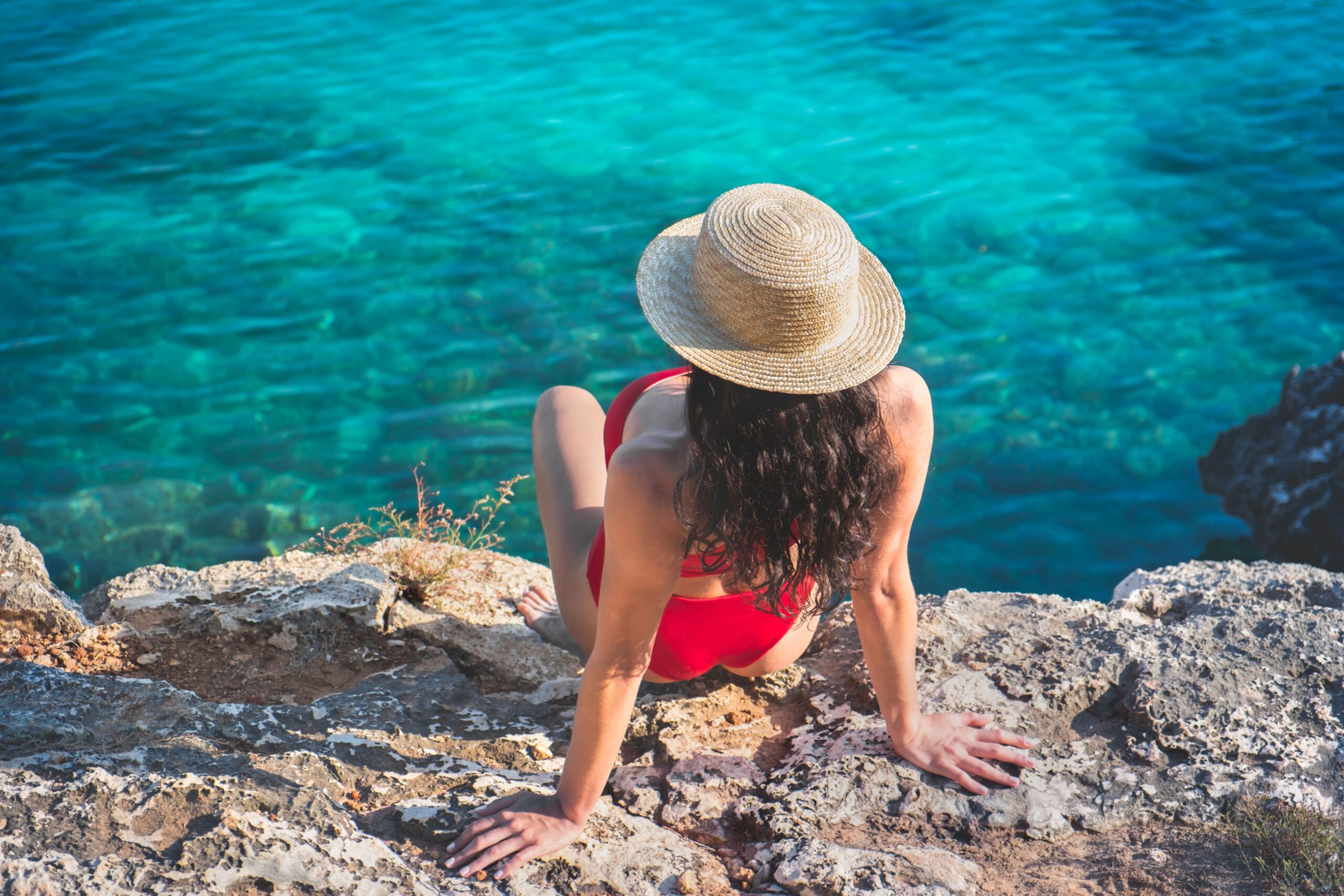
As for Palma de Mallorca beaches, if you want to feel the sand on your feet or take a dip in the Mediterranean, the city’s small crescent-shaped beach at Portixol is ideal.
It’s beautifully unspoilt, but this also means there’s not much in the way of deckchairs or sun loungers, so if you want to sunbathe or swim, you’ll want to bring your own towels.
For art fans, if you’re in town for a day, or even two, it’s worth heading out west of Palma to the Fundació Pilar i Joan Miró – the studio where Catalan surrealist painter and sculptor Miró lived. It’ll take you about half an hour each way by bus from the city centre or about ten minutes in a taxi. The Sightseeing Bus also stops there.
You can still see his paint pots and unfinished canvases more or less as he left them and there’s also a good collection of his paintings as well as gardens and a café.
Shelter from the heat amidst domed ceilings and original Moorish arches at the impressively intact, 12th-century Arab Baths aka Banys Arabes, in the Old Town. You can still see the different bathing areas and the peaceful, palm-tree-filled gardens are a shady oasis.
La Seu Cathedral and a wander through the Old Town.
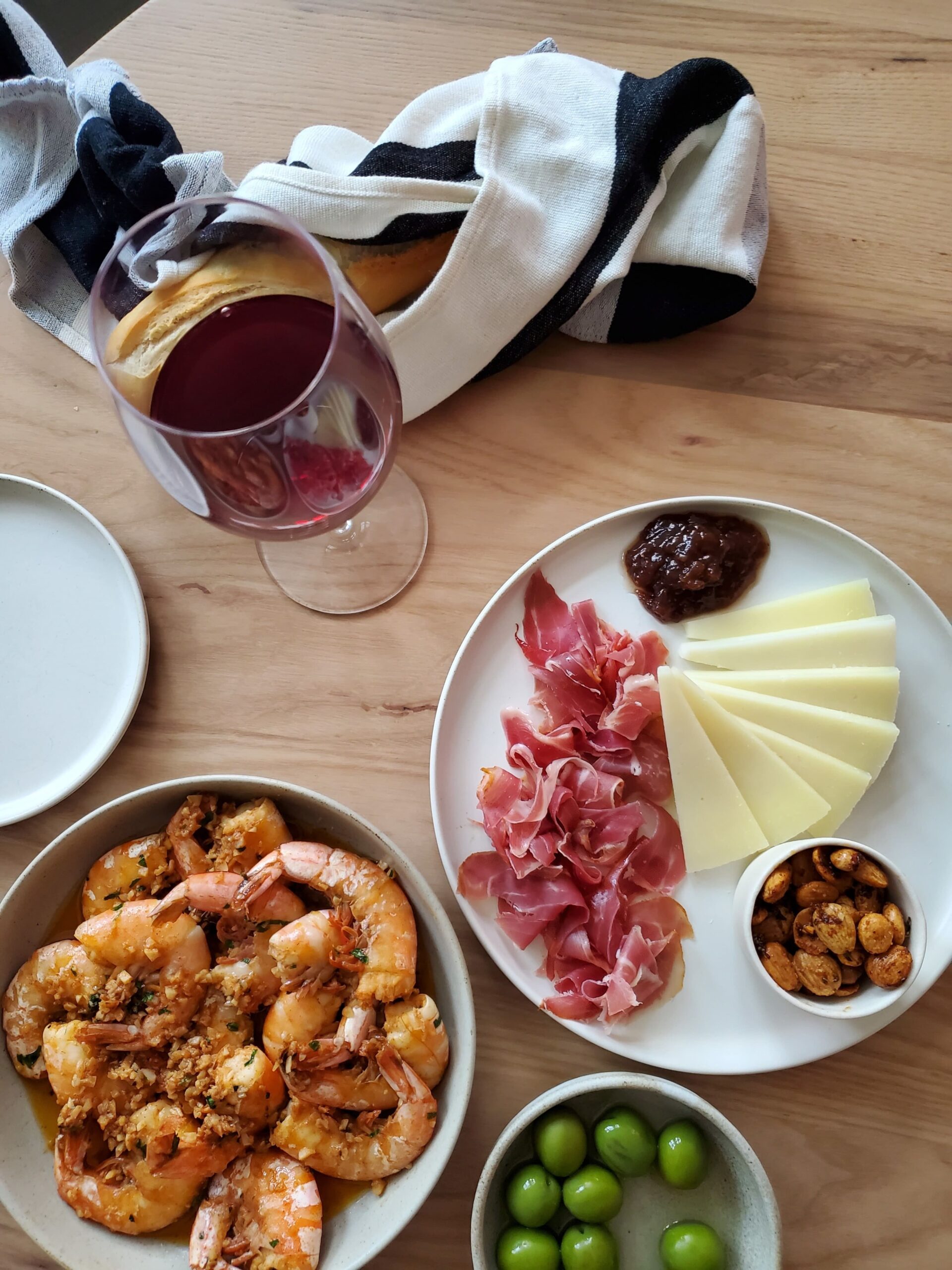
You’ll find great food all over town on cruises from Palma de Mallorca but the area known as La Lonja in the heart of the Old Town is a particularly good place to start. Otherwise, here are a few suggestions:
Vermuteria La Rosa, (Calle la Rosa 5)
For excellent tapas – and a glass of vermouth on the side, this contemporary bar, with industrial chic decor, is one of the best.
La Paloma, (Calle Apuntadores, 16)
Housed in a traditional old building with rough-hewn stone walls and beamed ceilings, this is a long-standing Palma favourite. Now Swedish-run, you’ll find elegant but classic tapas as well as great value set lunch menus (menus del día – around €30 for three courses) featuring traditional Mallorcan fare, including grilled meat and fish.
Mercat de L’Olivar food market, (Plaça de l’Olivar)
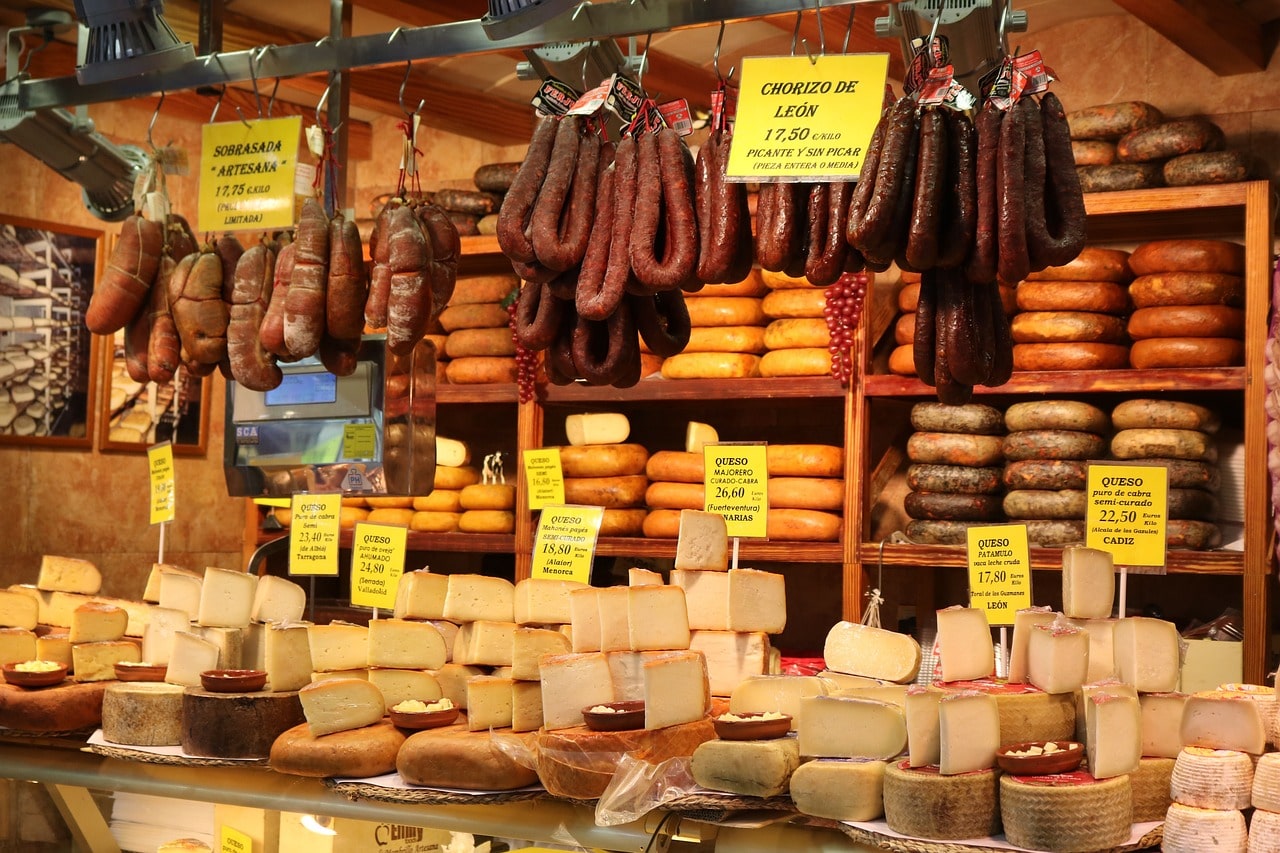
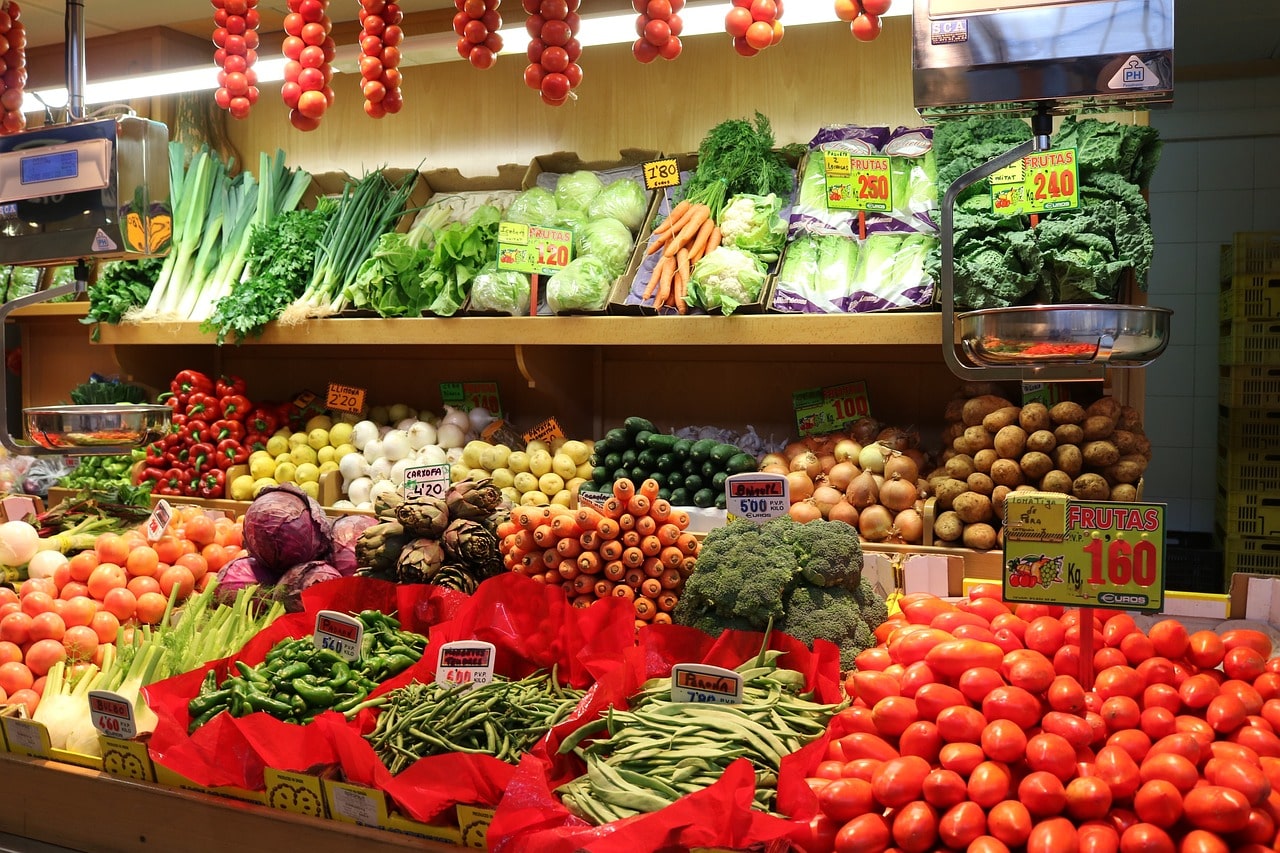
Palma’s central, covered food market [above] is a must for foodies (if you’ve been to La Boqueria in Barcelona, this is the Palma equivalent).
Ogle at tantalisingly fresh prawns or plump, rosy tomatoes at the decorative stalls featuring the freshest fare both from Mallorca as well as mainland Spain. You can also eat at one of the many tapas bars around the market and stock up on Mallorcan charcuterie and wines as souvenirs or gifts.
Andana (Plaza de Espanya, 6)
Star Mallorcan female chef Maca de Cana made her name at her Michelin-starred restaurant in Port d’Alcudia in the island’s northeast, but opened this new outpost in a former railway station in 2020. Look out for grilled squid with garlic potatoes and mayonnaise and broken eggs, chips and truffle (booking essential).
If you’ve done your sightseeing on your Palma de Mallorca cruise and need to refuel, the cafés around the central Plaça Major square in the heart of the Old town are perfect for people-watching over a beer or tinto de verano (red wine with lemonade).
Otherwise, for sundowners by the sea, look no further than the terrace at Varadero (Camí de L’Escollera, Moll Vell).
If you’re starting or ending your cruise in Palma, there’s no shortage of excellent hotels to extend your stay for every budget.
£: Hotel Amic Horizonte – This is a wallet-friendly choice overlooking Palma Bay, complete with a pool, simple rooms, and just a short taxi ride from the cruise port.
££: HM Jaime III – Right in the city centre, this stylish boutique hotel combines modern design with great access to Palma’s shops, restaurants, and sights.
££: Hotel Victoria Gran Meliá – A luxury favourite near the marina, offering elegant rooms, a spa, and sweeping views of the bay – perfect for starting or ending a cruise in style.
Where do cruise ships dock in Palma de Mallorca?
Cruise ships dock at the Port of Palma (Puerto de Palma), about 5km from the city centre. Large vessels usually berth at Estació Marítima, the main cruise terminal, while smaller ships may dock closer to the old town.
Is Palma de Mallorca walkable from a cruise port?
It’s possible to walk from Palma cruise port, but it takes around an hour and is not the most convenient option. Most travellers opt for a short taxi, shuttle bus, or local bus ride into the centre.
How do you get from Palma cruise port to the city centre?
The fastest way is by taxi (10–15 minutes). Many cruise lines also run shuttle buses, and local bus routes connect the port with central Palma at Plaça d’Espanya.
What to do in Palma, Mallorca in one day?
With one day in Palma you can explore the Gothic Cathedral of Santa Maria (La Seu), stroll the old town’s narrow lanes, visit Almudaina Palace, and enjoy tapas in a traditional café. You might also take a quick trip to Bellver Castle for panoramic views or relax on a nearby beach.
Is there a hop-on hop-off bus in Palma de Mallorca?
Yes, Palma has a hop-on hop-off sightseeing bus that stops at key attractions including the cathedral, Bellver Castle, and Pueblo Español. It’s a convenient way for cruise passengers to see the highlights in a short time.
What is special about Palma de Mallorca?
Palma blends history, culture, and seaside charm. Highlights include its stunning cathedral overlooking the sea, lively markets, medieval streets, and easy access to golden beaches. The mix of Spanish flair and island relaxation makes it a standout Mediterranean cruise port.
What is there to do near Palma de Mallorca cruise port?
Close to the port you’ll find Porto Pi shopping centre, Cala Major beach, and waterfront restaurants. A short ride brings you into Palma’s old town for sightseeing, shopping, and dining.
How far is Palma de Mallorca airport from the cruise port?
Palma Airport (PMI) is about 13km from the port, around 20 minutes by taxi.
Are there beaches near Palma cruise port?
Yes – Cala Major is about 10 minutes from the port, and Playa de Palma is around 20 minutes away. Both are ideal for swimming and sunbathing.
Do cruise ships tender in Palma de Mallorca?
No, Palma is a deep-water port where ships dock directly at the terminal.
What currency is used in Palma de Mallorca?
Palma uses the Euro (€). ATMs and exchange services are easy to find at the port and throughout the city.
Is Palma de Mallorca worth visiting on a cruise?
Definitely. Palma is one of the most popular Mediterranean cruise ports, offering a mix of architecture, culture, beaches, and shopping – all within easy reach of the cruise terminal.
Duration: 7 nights
Where: Fly from the UK | Palma, Mallorca | At Sea | Rome (Civitavecchia), Italy | Ajaccio, Corsica | Florence & Pisa (Livorno), Italy | Cannes, France | Barcelona, Spain | Palma, Mallorca | Fly to the UK
Ship: Marella Discovery
Price: From £895 pp
Duration: 12 nights
Where: Fly from the UK | Barcelona, Spain | Monte Carlo, Monaco | La Spezia (for Florence & Pisa), Italy | Ajaccio, Corsica | At Sea | Valletta, Malta | Messina, Sicily | Naples, Italy | Rome (Civitavecchia), Italy | Cagliari, Sardinia | At Sea | Palma, Mallorca | Barcelona, Spain | Fly to the UK
Ship: Celebrity Equinox
Price: From £1,708 pp
Duration: 12 nights
Where: Fly from London Heathrow | 2-night hotel stay in Barcelona, Spain | Cruise from Barcelona | Valencia, Spain | Palma, Mallorca | Cartagena, Spain | Málaga, Spain | Gibraltar | Seville, Spain – Overnight onboard | At Sea | Lisbon, Portugal | Fly to London Heathrow
Ship: Azamara Journey
Price: From £2,499 pp
Become the first to know about win-a-cruise competitions, on-trend holiday inspo and don’t-miss travel advice from the experts.

United Kingdom
USA